


Cracked heels – we care for the skin and cracks
Care for dry and cracked heels
When the skin on your heels is thick and dry, cracks can hurt with every step. We take off the hard skin, then show you how to care for your heels at home.
Dry feet and heels: what we do at the practice
Cracked heels usually come from a thick, dry layer of skin that has lost its flexibility. Under your body weight this skin does not stretch, it splits. Cream moisturises the surface but cannot get through the hard shell. So first we work on the thick skin, then we care for it.
Heels crack and the skin peels
The skin on your heels is rough and hard, and your feet feel very dry. Cracks can be deep and sometimes bleed. Walking barefoot hurts, sandals show it in summer, and the edges catch on socks and bedding. If there is a thick layer under the crack, see also calluses on the heels.
We work on thick skin and crack edges
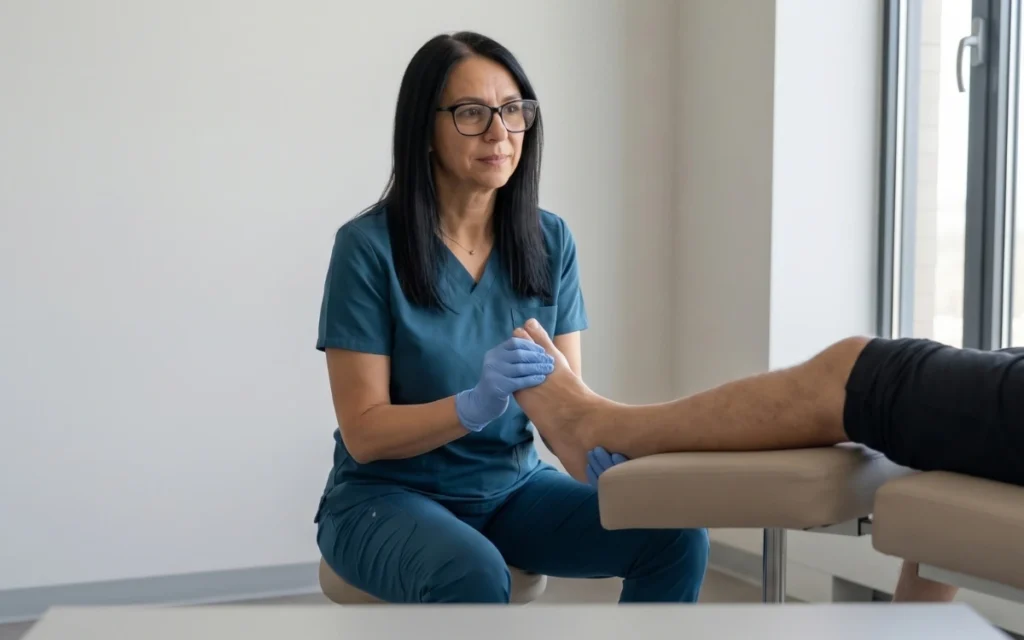
Care for dry feet starts with a chat about your routine and a look at your heels. With specialist podiatry tools we take off the hardened skin and smooth the edges of the cracks. Finally, we apply moisturising, softening and regenerating products.
You know what to put on your heels and how often
Heel cream works when you use it regularly. We tell you which product to choose, how much to apply and when, so the skin does not dry out between visits. If you want regular care for your feet and nails, see our podological pedicure.
Half the work happens at home
At the practice, we work on thickened heel skin and advise on care at home. Regular care matters between visits. We explain how to use the recommended products and when a follow-up may be useful.
At follow-up visits we check how your skin responds to home care and adjust our advice if needed. When the cracks are linked to calluses or to how you load your foot, we look beyond the heel itself.
How much cracked heel care costs
The price covers work on the skin of the feet. For deep cracks, your podologist sets the scope and cost after assessment. A full podological pedicure is priced separately.
Your visit step by step
A calm conversation
A calm conversation
Foot assessment
Foot assessment
The procedure
The procedure
Advice and follow-up
Advice and follow-up
What our clients say

Cracked heels: common questions
Why do my heels crack?
Most often because of dry skin and hard skin building up around the edge of the heel. Flip-flops and backless sandals, long hours standing and infrequent care all add to it. With each step the heel spreads sideways, and an open shoe gives it no support. That is why the problem often returns in summer.
What can I do about cracked heels at home?
Moisturise your heels regularly, even once they stop hurting. File thick skin gently and never cut it with a blade, as that can easily cause a wound. At night you can apply a thicker layer of cream and put on socks. If the cracks bleed or get deeper, do not wait and come in for an assessment.
What should I soak dry heels in?
You do not need long soaks. Long foot baths, especially in hot water, tend to dry the skin rather than moisturise it. What you do every day matters more: a quick wash, careful drying and cream. We will suggest a product that suits your heels during your visit.
When should I see a podologist about cracked heels?
When the cracks are deep, hurt when you walk, or a few weeks of home care change nothing. We will work on the hard skin and tell you what comes next. If you notice redness, swelling or pus around a crack, visit a GP first. You can check our prices on the full price list.
Does heel care hurt?
In most cases the procedure is well tolerated. We take off the thick layer gradually and work on the edges of the cracks with extra care, as the skin there can be sensitive. You can tell us at any point if something feels unpleasant. If needed, we use soothing products.
I only have dry feet, no cracks. Can I still come to you?
Yes. Dry feet without cracks are a good reason to visit before the skin starts to split. We will work on the thick skin and show you how to keep it soft for longer. For regular care, a podological pedicure is recommended about every 4 weeks, in step with the skin’s renewal cycle.