


Ingrown toenail – we free the edge and fit a brace
Ingrown toenail correction, orthonyxia braces
An orthonyxia brace is a thin strip on the nail plate that gradually lifts its edges and guides how the nail grows. We fit it after working on the ingrown edge.
Nail braces for ingrown toenails
An ingrown toenail is a nail whose edge presses into the skin fold beside it. In a shoe, every bit of pressure on the toe goes into that edge, which is why it hurts. We work on the ingrown part and, when needed, fit an orthonyxia brace that helps the nail grow in the right direction.
The nail digs into the skin
The corner of the nail grows into the side of the toe, and the skin around it turns red and swollen. It hurts in closed shoes, sometimes even under the duvet. The nail can also curl in at the sides, known as a pincer nail. Many people put it simply: “it hurts with every step”.
We work on the edge and fit a brace
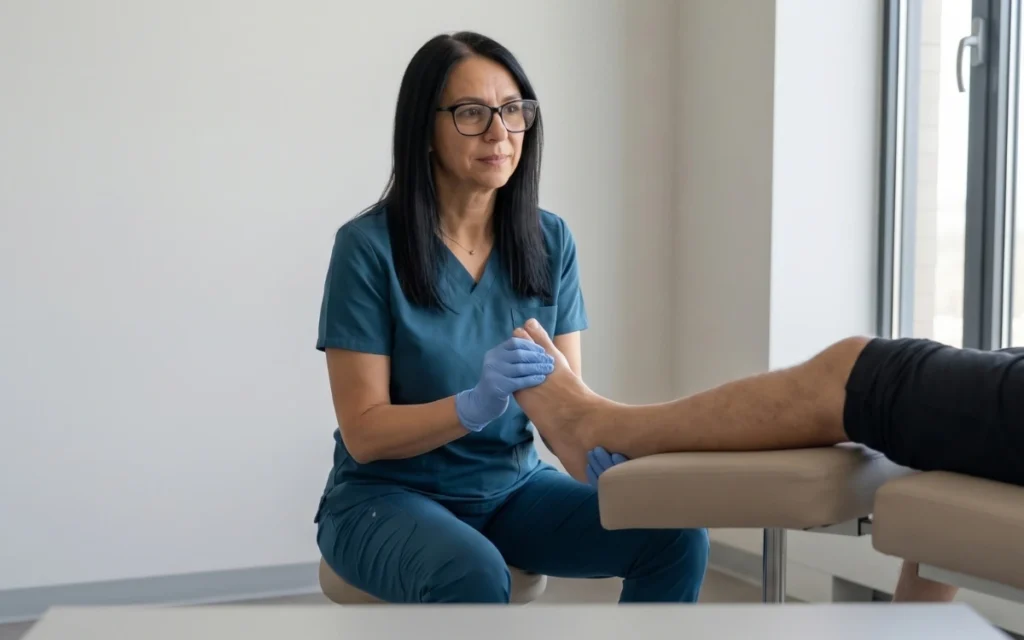
We assess the nail and work on the ingrown edge to ease the pressure. Then we choose how to correct the ingrown toenail: we fit an orthonyxia brace or, if the nail edge needs rebuilding, suggest a corrective nail prosthetic. Finally, you get advice for home.
You have a plan for the next visits
Correction takes months, because the nail grows slowly. We book follow-up visits to check the brace and the direction of growth. Once the correction is complete, regular podological pedicure visits help keep your nails in good shape.
We match the brace to your nail
We change the shape of the nail gradually and gently, with no sudden moves. Before each step we tell you what we will do and why. We also explain what to expect and what part of the correction depends on you.
The ORTHOPODO specialists work with ingrown toenails every day at our Mokotów practice. We leave time for conversation during the visit, so you can ask about anything that worries you without feeling rushed.
How much a nail brace costs
Prices are per side of the nail or per brace. Your podologist confirms the final cost after assessing the nail at your visit.
Your visit step by step
A calm conversation
A calm conversation
Foot assessment
Foot assessment
The procedure
The procedure
Advice and follow-up
Advice and follow-up
What our clients say

Nail braces: common questions
Does fitting a nail brace hurt?
In most cases the procedure is well tolerated. For the first few days you may feel slight tension in the nail as the brace starts working. If the toe is very sensitive, we work more slowly. If something rubs, let us know and we will check the brace. We can also use soothing products.
How long do you wear a nail brace?
It depends on how curved the nail is and how fast it grows. We do not give one timeline for everyone, because every correction runs differently. After a few follow-up visits it is easier to judge how long it will take. During that time we replace or adjust the brace as the nail grows.
What results can a nail brace give?
A brace reduces the pressure of the nail on the skin, because over time it reshapes the curled edges of the nail. As the correction goes on, pain in shoes usually eases. The result also depends on how you cut your nails and what shoes you wear, so we do not promise the problem will never return.
Are nail braces chosen individually?
Yes. Before fitting a brace, we assess the thickness of the nail, how curved it is and the condition of the skin around it. This decides the type of brace and the approach, and sometimes whether a brace is needed at all. We never choose a brace in advance, only after seeing your nail.
How much does a brace for an ingrown toenail cost?
Fitting a brace costs from 150 PLN per brace, and work on the ingrown edge from 180 PLN per side of the nail. We set aside 60 minutes for each of these procedures. The total depends on how many sides of the nail need work. You will find every item in our price list.
My toe is red and there is pus. Can I come straight away?
First see a GP, especially if there is pus, strong swelling or a fever. This needs to be assessed by another specialist. Once the inflammation settles, we will take care of correcting the nail. You can already book a later date through the contact form.
How should I cut my toenails so they do not grow in?
Straight across, without rounding the corners and not too short, so the corners do not sink into the skin. Choose shoes that do not squeeze your toes from the sides or from above. These tips help, but they do not replace an assessment of the nail. If cutting your nails yourself is difficult, we can do it at the practice.